Handle design findings and changes
Keep unresolved design gaps separate from authorized progression decisions.
2.4 minutes · English captions · Illustrations and worked example
This lesson’s core explanations and worked-example reasoning are narrated. The table restates the example for reference; the practice activity and model answer are reading exercises.
English captions available.
Narration and visual explanations
Open View Technical Explanation to see each diagram, its text description and the matching narration. Standard abbreviations and numerals are used visually.
A finding needs a clear basis
View Technical Explanation · Diagram 1
Lesson explanation
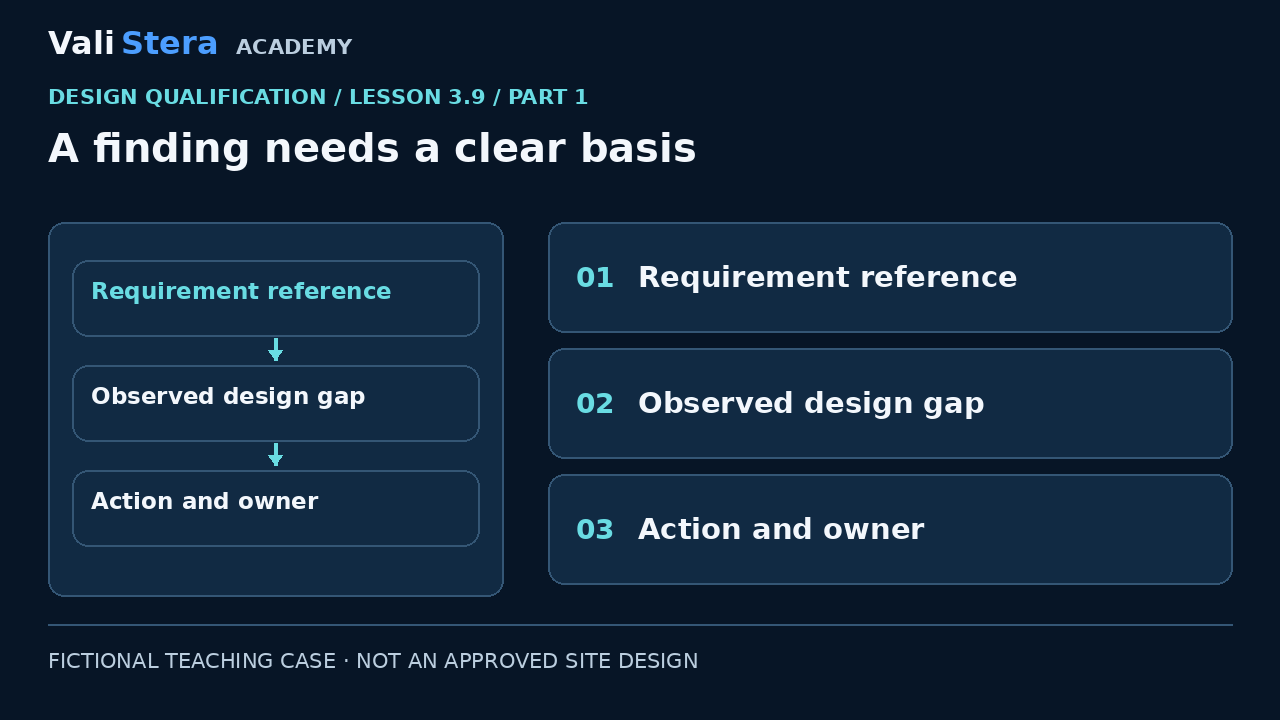
A useful finding identifies the requirement, the specific design evidence and the gap. For example: drawing revision B contains a cleaning pocket that has no reviewed rationale against the cleaning concept. Assign an owner and define what evidence would support closure. Avoid replacing the finding with a vague status such as vendor to confirm. A due date helps manage work, but it does not establish that the design is suitable.
Different outcomes are possible
View Technical Explanation · Diagram 2
Lesson explanation
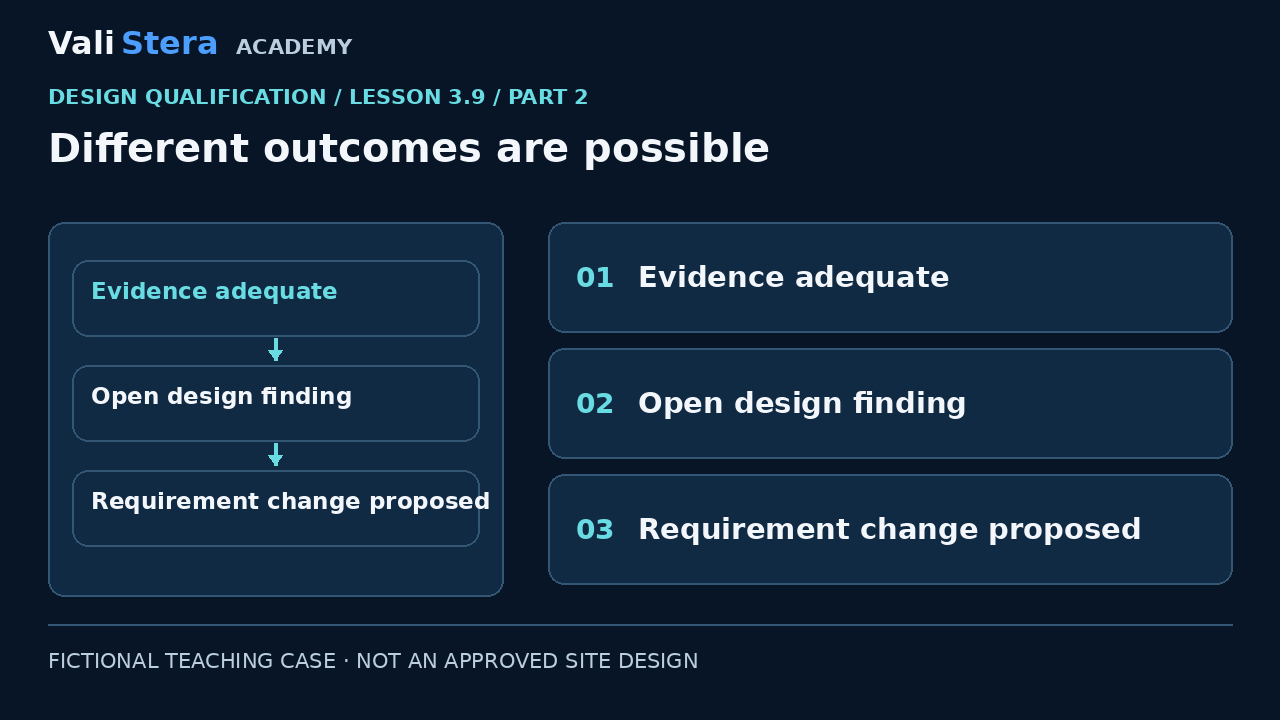
Our teaching review uses three distinct outcomes: design evidence adequate, an open design finding, or a proposed requirement change. These are course labels, not mandatory regulatory terminology. If the vendor cannot meet a requirement, assess options with the appropriate process and quality expertise. Do not close the gap by deleting the requirement without impact review. A proposed change remains a proposal until the applicable approval process accepts it.
Conditional next activity
View Technical Explanation · Diagram 3
Lesson explanation
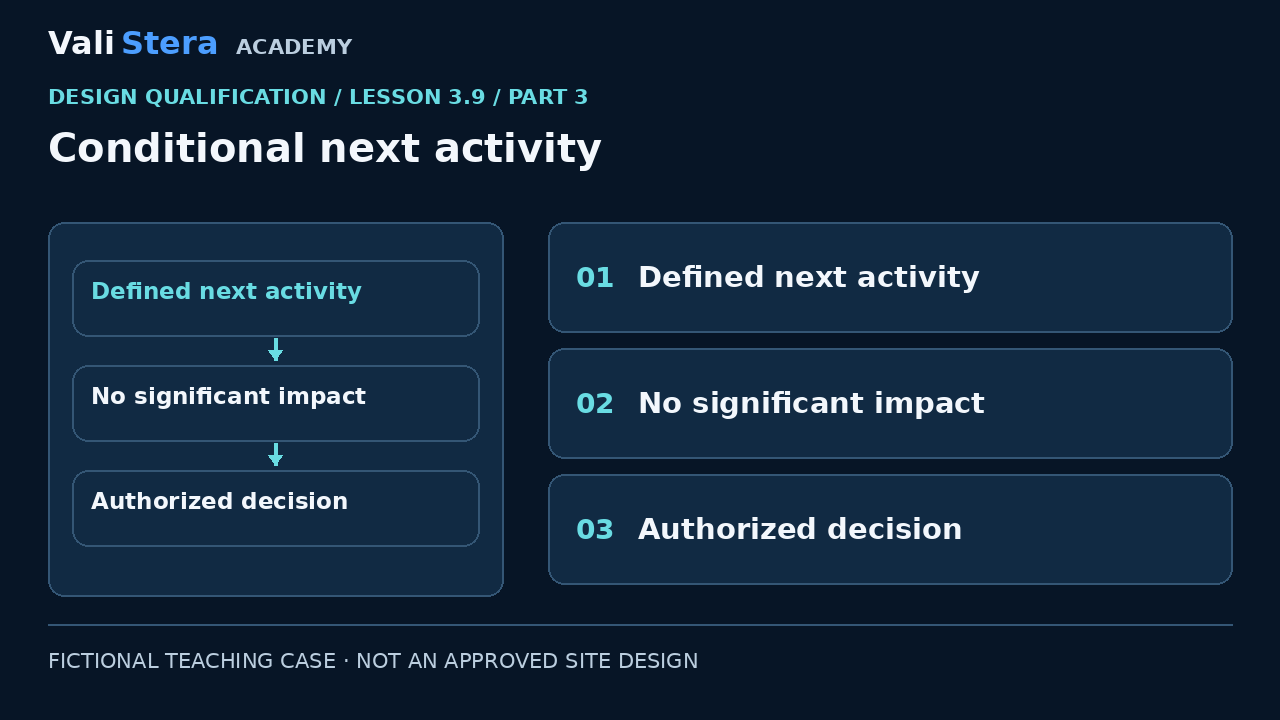
Conditional progression concerns a particular next qualification activity, not unrestricted production. In the fictional case, a missing product-contact gasket basis prevents a final materials conclusion. For example, a proposed transition to IQ may be limited to equipment identification checks unaffected by the gasket gap. This requires a documented assessment of no significant impact on that next activity and authorization by responsible personnel. Gasket-dependent checks remain on hold. Preparing documents alone is not progression to a qualification stage, and neither activity authorizes manufacturing. The responsible personnel need a documented impact assessment and an authorized decision for the proposed stage. Do not assume that the training author, supplier or learner can grant a site’s approval.
A controlled revision trail
View Technical Explanation · Diagram 4
Lesson explanation
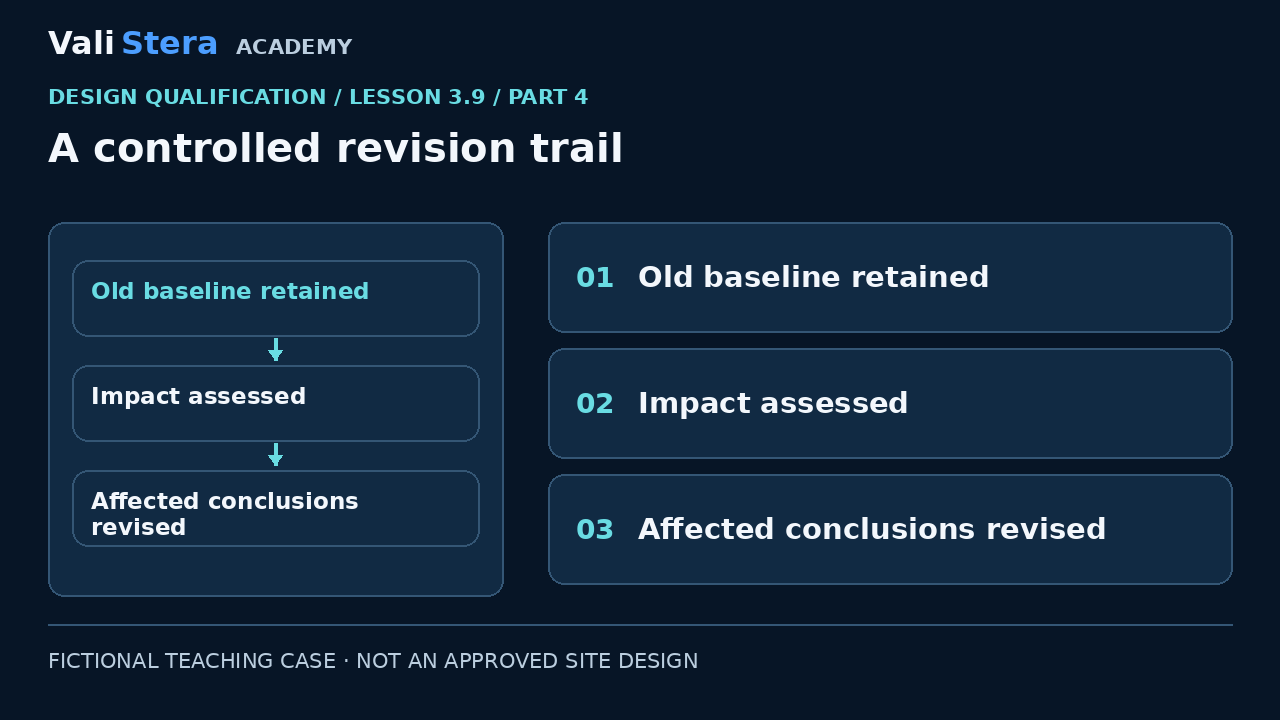
When a gasket specification changes, retain the earlier baseline and record why the new design was selected. Revisit contact compatibility, cleaning assumptions and verification plans as appropriate. Update affected conclusions through the quality system. The record should allow another reviewer to reconstruct the decision without relying on memory. Your activity is to write an action closure that references the revised evidence and preserves any outstanding later tests.
Worked example
| Field | Filled finding record |
|---|---|
| ID / basis | F-04; gasket suitability against contact-material requirement |
| Evidence gap | Material specification missing from supplier list revision B |
| Action | Supplier identifies material; materials/cleaning specialists review evidence |
| Closure condition | Reviewed suitable basis and controlled revised specification |
| Not implied | No installed-identity check or cleaning study has yet passed |
Apply it · Activity 9
Write a closure entry for a revised gasket and decide whether the next proposed activity can proceed.
Open workbook activityCompare with model reasoning
Identify original finding, new material/evidence revision, suitability rationale, reviewer and later identity/cleaning checks. Assess the specific next activity; do not equate conditional progression with routine-use approval.