Prepare the IQ baseline and protocol
Define what will be checked, how, and against which controlled criteria.
1.9 minutes · English captions · Illustrations and worked example
This lesson’s core explanations and worked-example reasoning are narrated. The table restates the example for reference; the practice activity and model answer are reading exercises.
English captions available.
Narration and visual explanations
Open View Technical Explanation to see each diagram, its text description and the matching narration. Standard abbreviations and numerals are used visually.
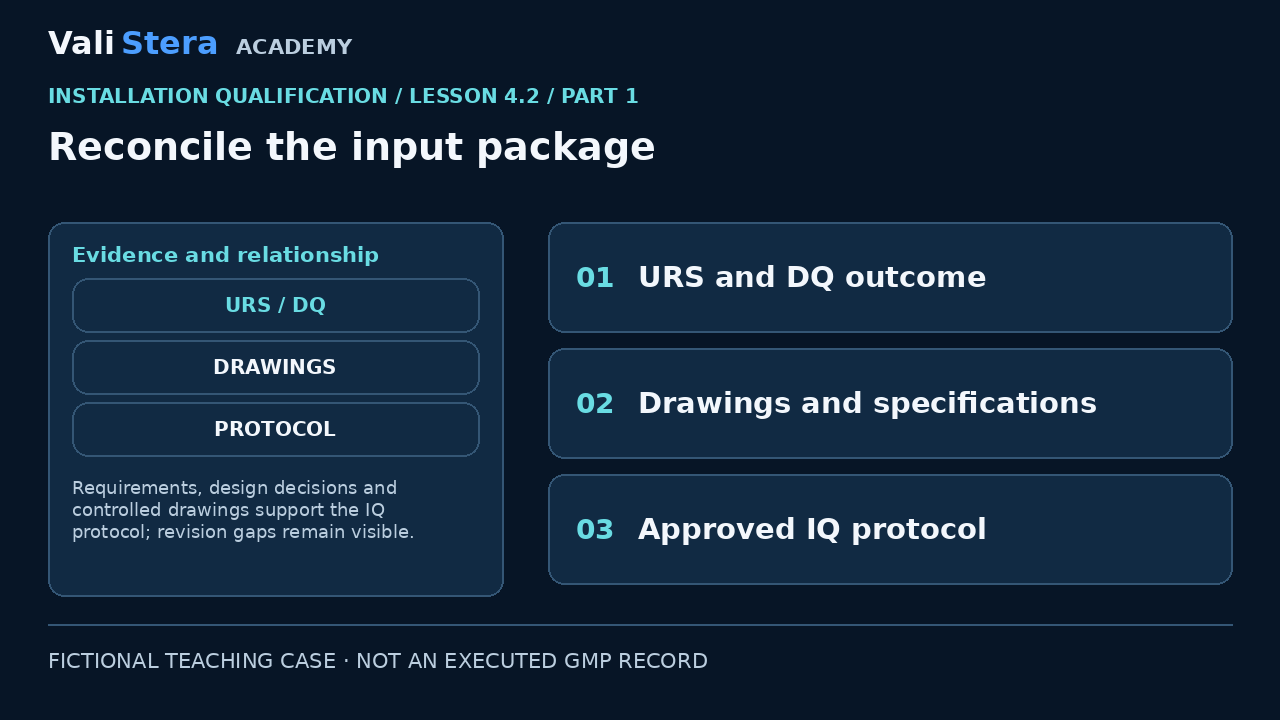
Reconcile the input package
View Technical Explanation · Diagram 1
Lesson explanation
The fictional installation package contains the user requirements, design-review outcome, accepted drawings and an installation protocol. List identifiers and revisions before the walkdown. An email attachment labelled final is not enough to establish its approval status. If the valve drawing changed after design review, identify the change and its accepted impact before relying on the old conclusion.
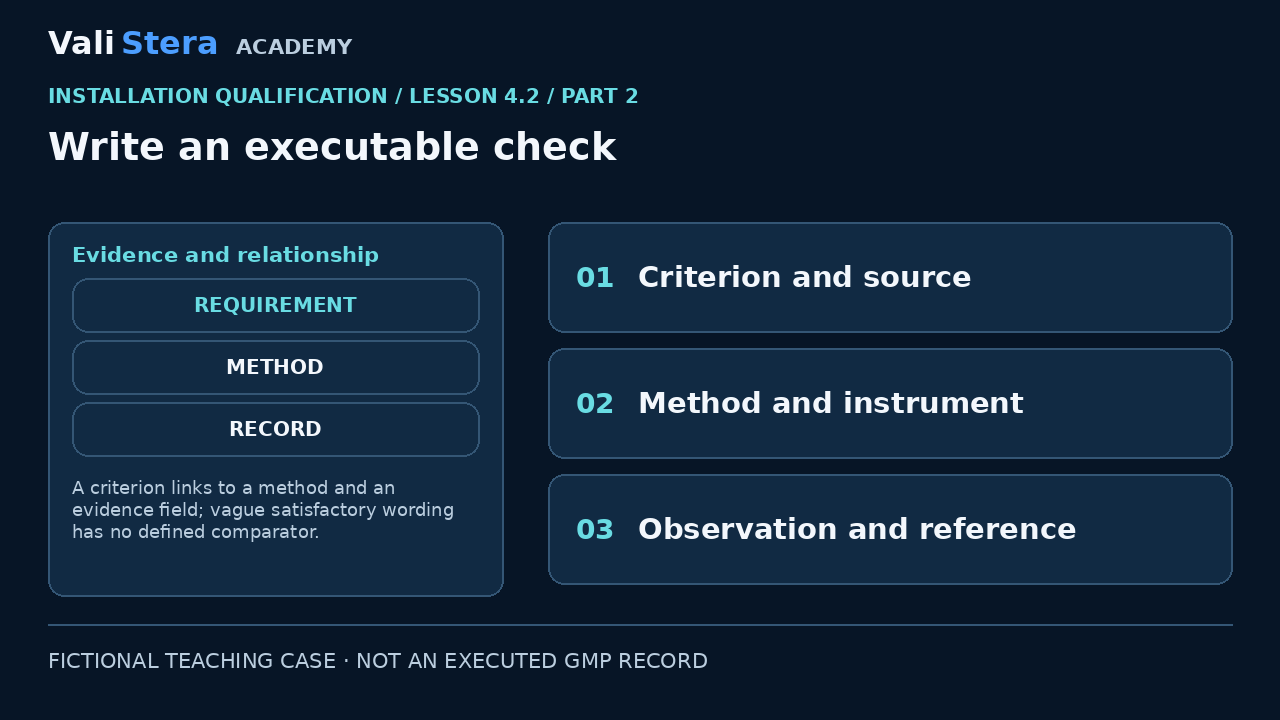
Write an executable check
View Technical Explanation · Diagram 2
Lesson explanation
Replace verify installation is satisfactory with a check another trained person can repeat. For example, compare the installed outlet valve tag and model against schedule revision C, using a safe visual inspection and the identified manufacturer plate. Define what information will be recorded and how inaccessible markings will be handled. Do not leave the acceptance rule to be invented after seeing the result.
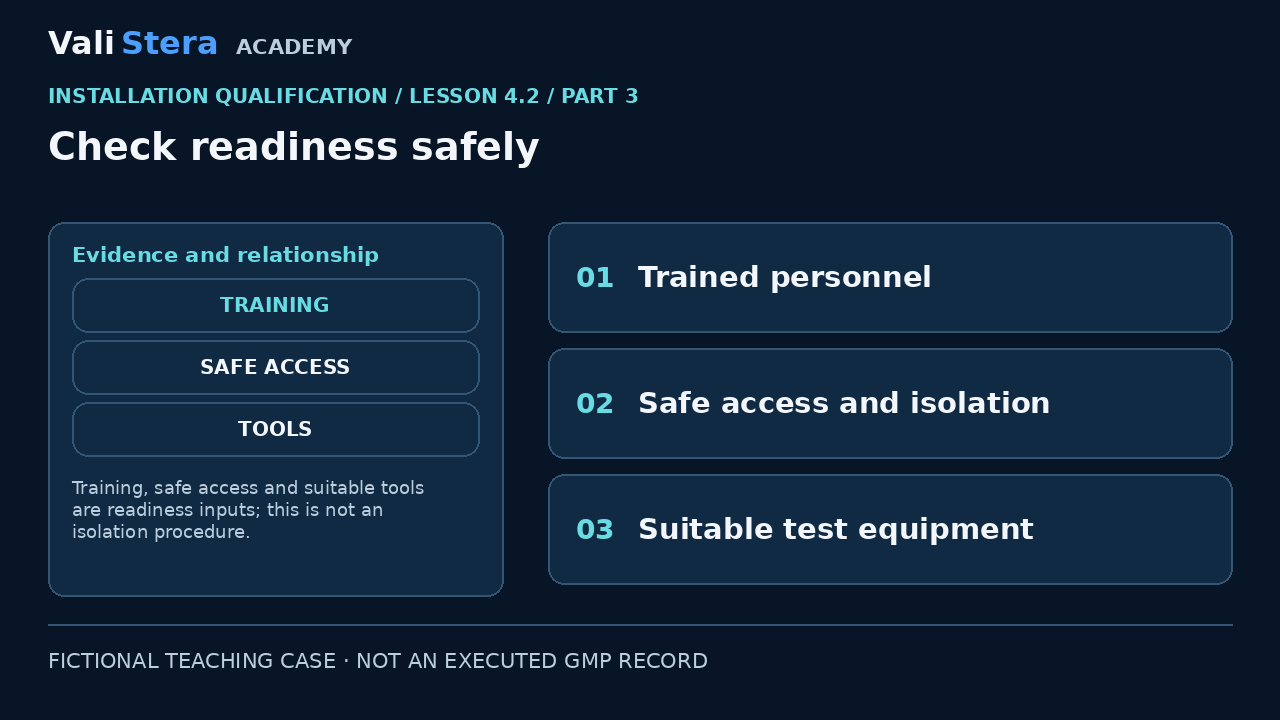
Check readiness safely
View Technical Explanation · Diagram 3
Lesson explanation
Before inspecting, confirm training, access arrangements and any required isolation with the responsible engineering team. Do not remove guards, open electrical panels or disconnect a process line merely to complete a checklist. If a marking cannot be reached safely, record that limitation and arrange an approved method. Schedule pressure does not turn an unsafe inspection into acceptable evidence.
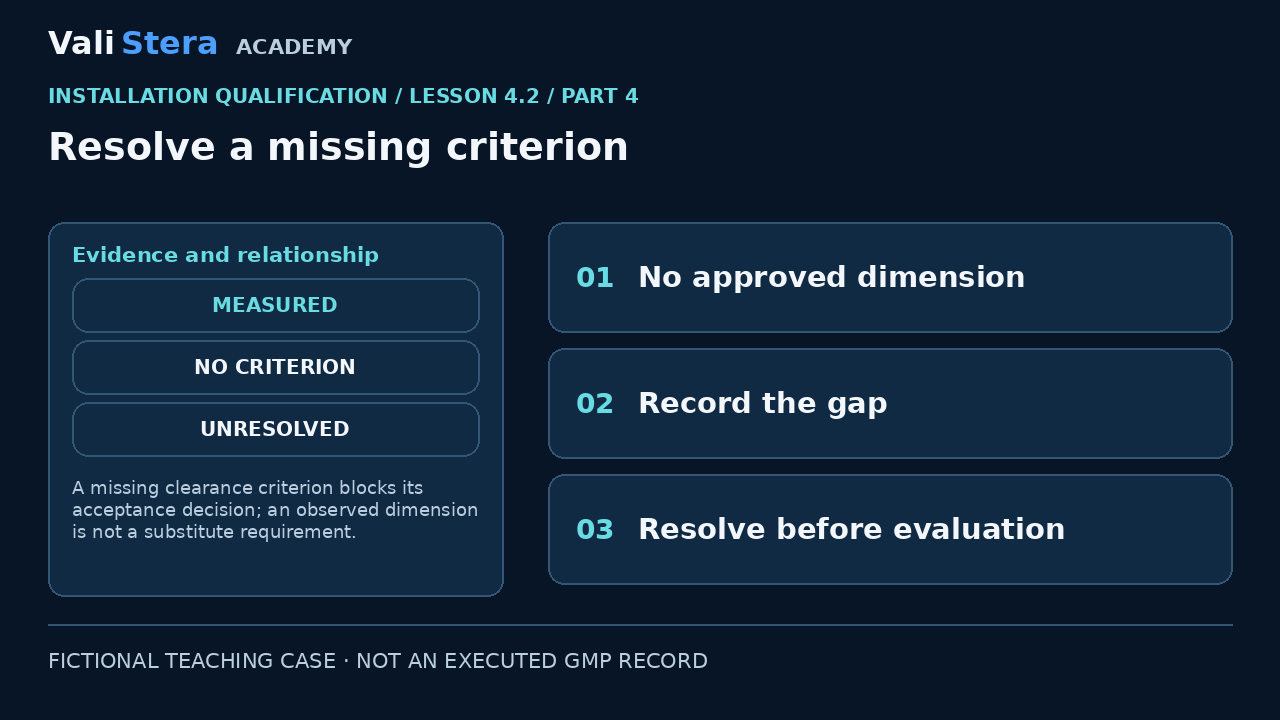
Resolve a missing criterion
View Technical Explanation · Diagram 4
Lesson explanation
Suppose the drawing shows a clearance but provides no approved minimum. Measuring a convenient distance and then calling it acceptable creates a circular argument. Raise the missing requirement to the responsible design and quality functions. The team may collect a clearly identified observation, but acceptance of that feature remains unresolved until the criterion and approach are properly established.
Worked example
| Field | Teaching entry |
|---|---|
| Baseline | VAL-V201 revision C, fictional accepted schedule |
| Criterion | Tag/model match specified item |
| Observation | Actual tag/model and location recorded |
| Exception | Unreadable plate: identity unresolved |
Apply it · Activity 2
Write an IQ check for outlet valve identity with baseline, criterion, safe method and evidence fields.
Open workbook activityCompare with model reasoning
Name the controlled schedule and revision, required tag/model, visual method, actual observed identifiers, evidence reference, executor/date and discrepancy route. Confirm safe access; do not infer acceptance from an unapproved drawing.