Investigate discrepancies and manage changes
Keep failed checks, corrective work and re-verification traceable.
2.0 minutes · English captions · Illustrations and worked example
This lesson’s core explanations and worked-example reasoning are narrated. The table restates the example for reference; the practice activity and model answer are reading exercises.
English captions available.
Narration and visual explanations
Open View Technical Explanation to see each diagram, its text description and the matching narration. Standard abbreviations and numerals are used visually.
Describe the mismatch
View Technical Explanation · Diagram 1
Lesson explanation
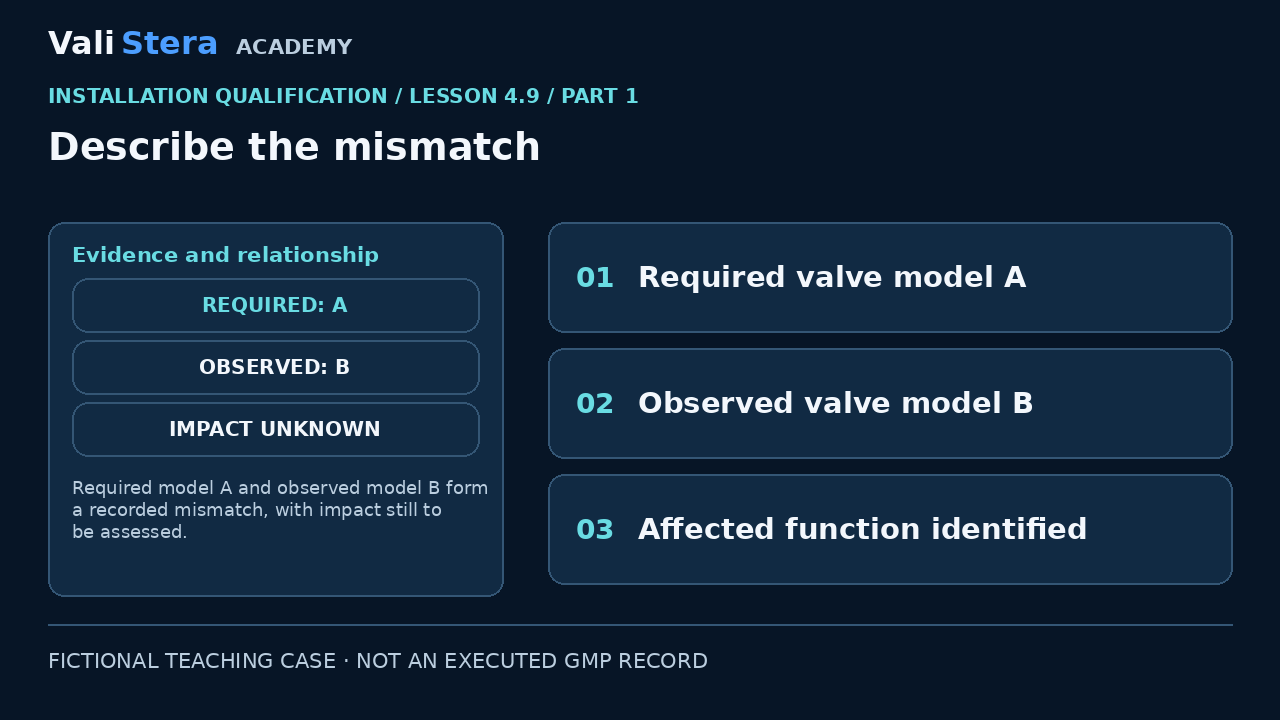
The accepted schedule specifies valve model A, while the installed plate shows model B. Record the mismatch and its exact location. Do not decide from the model number alone whether the difference is harmless. Assess relevant materials, connection, cleaning and functional implications with the responsible experts. Retain the original observation even if the supplier later replaces the valve.
Choose a controlled action
View Technical Explanation · Diagram 2
Lesson explanation
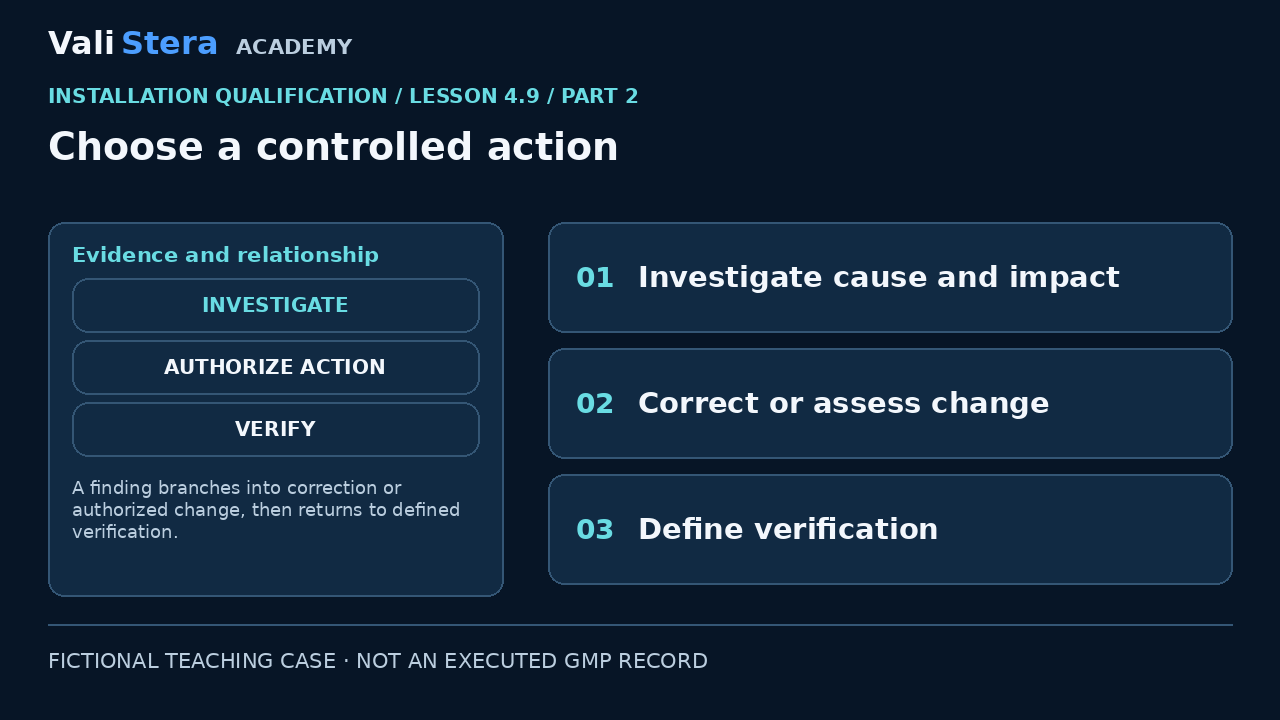
Correction may restore the specified valve, or a proposed design change may require an authorized assessment. These are not the same route. Do not revise the acceptance criterion merely to match what arrived. Define what verification follows the approved action and whether earlier checks or later tests are affected. Keep the decision and supporting rationale linked to the finding.
Verify closure evidence
View Technical Explanation · Diagram 3
Lesson explanation
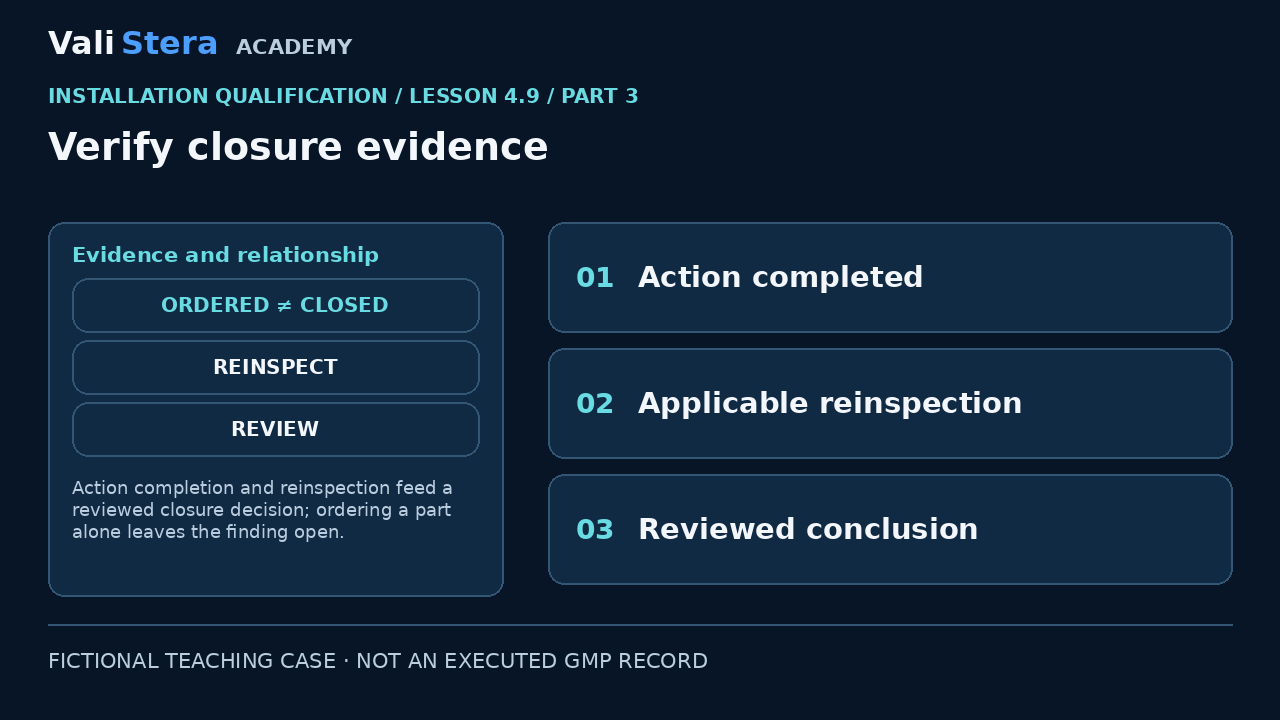
A purchase order for the replacement is not closure evidence. After the authorized action, obtain the specified installation evidence and assess any related implications. Retain the original failure and the subsequent result as separate records. A clean second result should not erase the history or imply that the first configuration had always complied.
Limit conditional progression
View Technical Explanation · Diagram 4
Lesson explanation
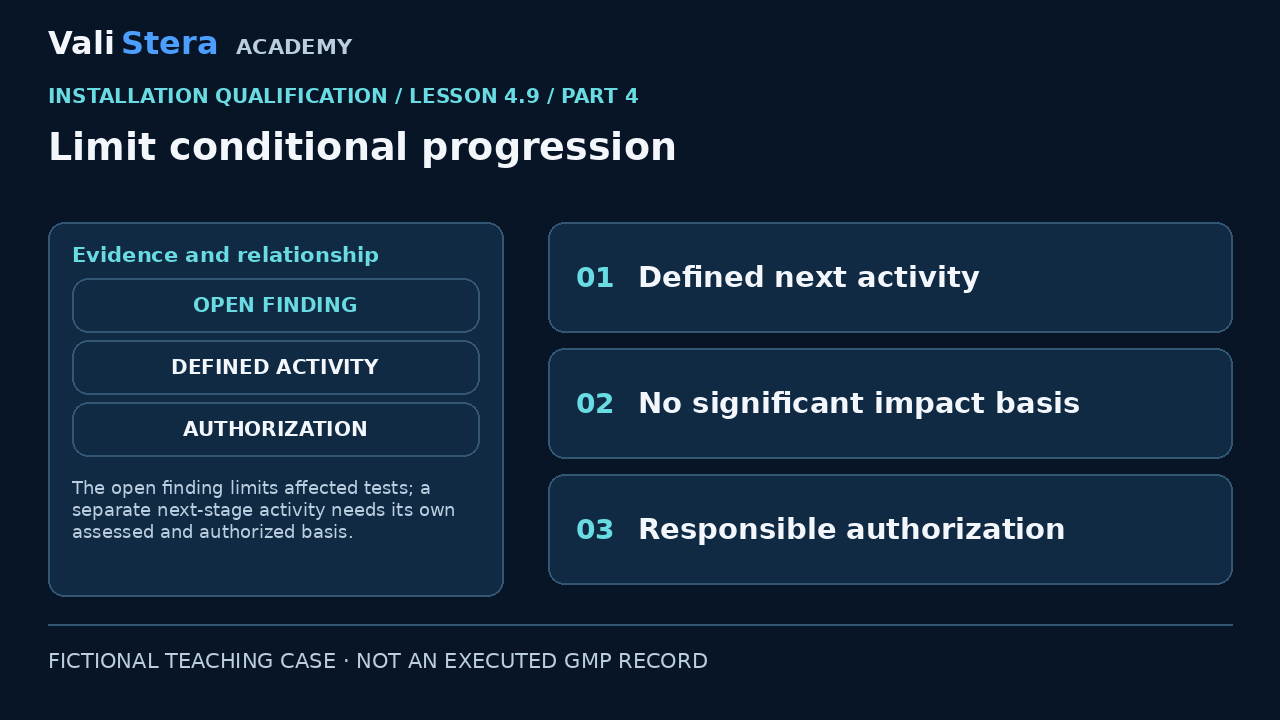
Annex 15 permits conditional approval to proceed to the next qualification stage following a documented assessment that there is no significant impact on the next activity. Responsible authorization is still needed. For example, an unresolved gasket issue may prevent wetted-system challenges even if a separately assessed dry control-display check could proceed. This activity-specific dry-check example is a practical teaching recommendation, not wording prescribed by the Annex or permission to proceed. Do not use a high completion percentage as a substitute for the assessment.
Worked example
| Event | Status |
|---|---|
| Wrong valve observed | Deviation recorded and impact assessed |
| Replacement ordered | Action planned; finding still open |
| Replacement verified | Closure evidence available for review |
| Next-stage activity | Separate documented authorization required |
Apply it · Activity 9
Draft a discrepancy entry for the wrong valve and identify what is required before closure or limited progression.
Open workbook activityCompare with model reasoning
Record expected/actual model and evidence, assess impact, use the controlled correction/change route, define reinspection and retain history. Any limited OQ progression needs an activity-specific no-significant-impact assessment and authorization.